- Leather is durable and timeless: it develops a patina instead of wearing out.
- Fabric offers softness, warmth and a far wider range of colours.
- Stain-resistant fabrics (EasyClean) clean up with water and suit families.
- The right choice mainly depends on your lifestyle: pets, children, light, budget.
Upholstery isn't just a matter of looks: it determines maintenance, durability and how it feels every day when you settle in. Leather or fabric? Both are excellent choices — as long as you match them to your everyday life. Here's how to decide, step by step.
1. Leather: elegance and longevity
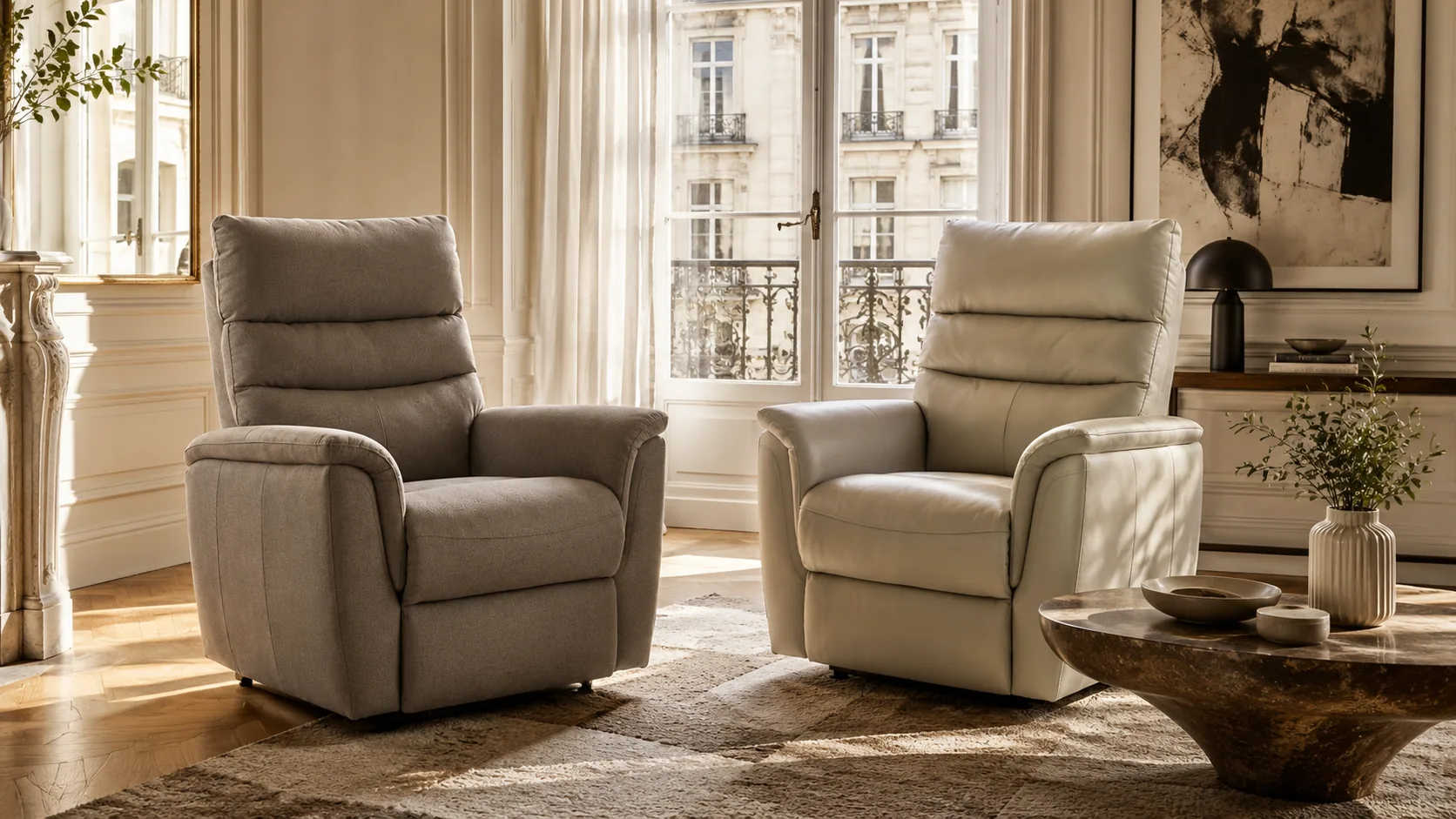
Leather is the quintessential premium upholstery. Hard-wearing, it develops a patina over the years instead of wearing out, gaining character as it ages. It's a lasting investment, provided you choose the right quality.
The different types of leather
- Full-grain leather: the top layer of the hide, the finest and most hard-wearing. It breathes and develops a beautiful patina.
- Corrected-grain leather: sanded then pigmented, more uniform and more affordable, but slightly less breathable.
- Split leather: the lower layer, economical but less durable.
Caring for leather
Regular dusting and a nourishing treatment once or twice a year are all it takes. Keep leather away from direct heat sources and prolonged sunlight, which dry it out. Stains should be dealt with quickly, using a soft cloth.
2. Fabric: softness and colour
Fabric brings warmth to the touch, acoustic comfort and a far wider range of colourways than leather. Today's technical fabrics bear no comparison to those of the past when it comes to durability.
The different types of fabric
- Microfibre: dense, soft and highly abrasion-resistant, it mimics suede.
- Velvet: elegant and warm, it plays beautifully with light; best reserved for lighter use.
- EasyClean fabrics: treated to be water-repellent, giving you time to wipe up a spill before it sets in.
Caring for fabric
Regular vacuuming (with a soft brush) prevents dust from working its way in. On a stain-treated fabric, most everyday spills — coffee, juice, chocolate — wipe away with warm, soapy water if you act quickly.
"The best upholstery isn't the most expensive one: it's the one that suits your pace of life."
3. Leather or fabric: the comparison
| Criteria | Leather | Fabric |
|---|---|---|
| Durability | Very high, develops a patina | High (depending on the fabric) |
| Maintenance | Occasional nourishing treatment | Vacuuming + stain treatment |
| Feel | Cool in summer, warms up | Warm all year round |
| Colours | Limited palette | Very wide |
| Children / pets | Withstands light scratches | Choose a tightly woven, water-repellent fabric |
| Budget | €€€ | €€ |
4. Which upholstery suits your situation?
Rather than deciding in the abstract, start from your everyday life:
- You have pets: a tightly woven, water-repellent fabric, or full-grain leather, will hold up better; avoid velvet.
- You have young children: choose an EasyClean fabric that wipes clean with water.
- The armchair sits near a picture window: leather doesn't like prolonged sunlight, so a UV-resistant fabric will age better.
- You're after timelessness: leather stands the test of fashion and can be passed down.
- You like to change your décor: fabric offers colour and a gentler price tag.
5. Making your upholstery last
Whichever you choose, a few simple habits will keep your armchair looking its best: alternate your seating spots to spread out the wear, avoid direct sunlight, treat stains without delay and, for leather, nourish the material once or twice a year. Well-maintained upholstery keeps its shine for years. For the full picture on choosing your seat, see our guide How to Choose Your Relaxation Armchair →
Frequently asked questions
Which lasts longer, leather or fabric?
A quality full-grain leather is unbeatable for longevity: it develops a patina without wearing out. On the fabric side, a dense, well-maintained microfibre offers an excellent lifespan, longer than that of a delicate velvet.
Which upholstery should you choose if you have pets?
Choose a tightly woven, water-repellent fabric or full-grain leather. Avoid velvet and looped fabrics, in which claws can catch.
How do you remove a stain from a fabric armchair?
Act quickly: blot without rubbing, then clean with lightly soapy warm water. On a stain-treated fabric, most marks come out without leaving a trace.
Does leather fade in sunlight?
Yes: direct, prolonged exposure dries out and fades leather. Position the armchair away from a picture window, or choose a UV-resistant fabric if the spot is very bright.
Does fabric look less premium than leather?
Not at all. Today's technical fabrics — microfibres, fine velvets, water-repellent treatments — offer a very high-quality finish, with a richness of colour and texture that leather simply can't match.