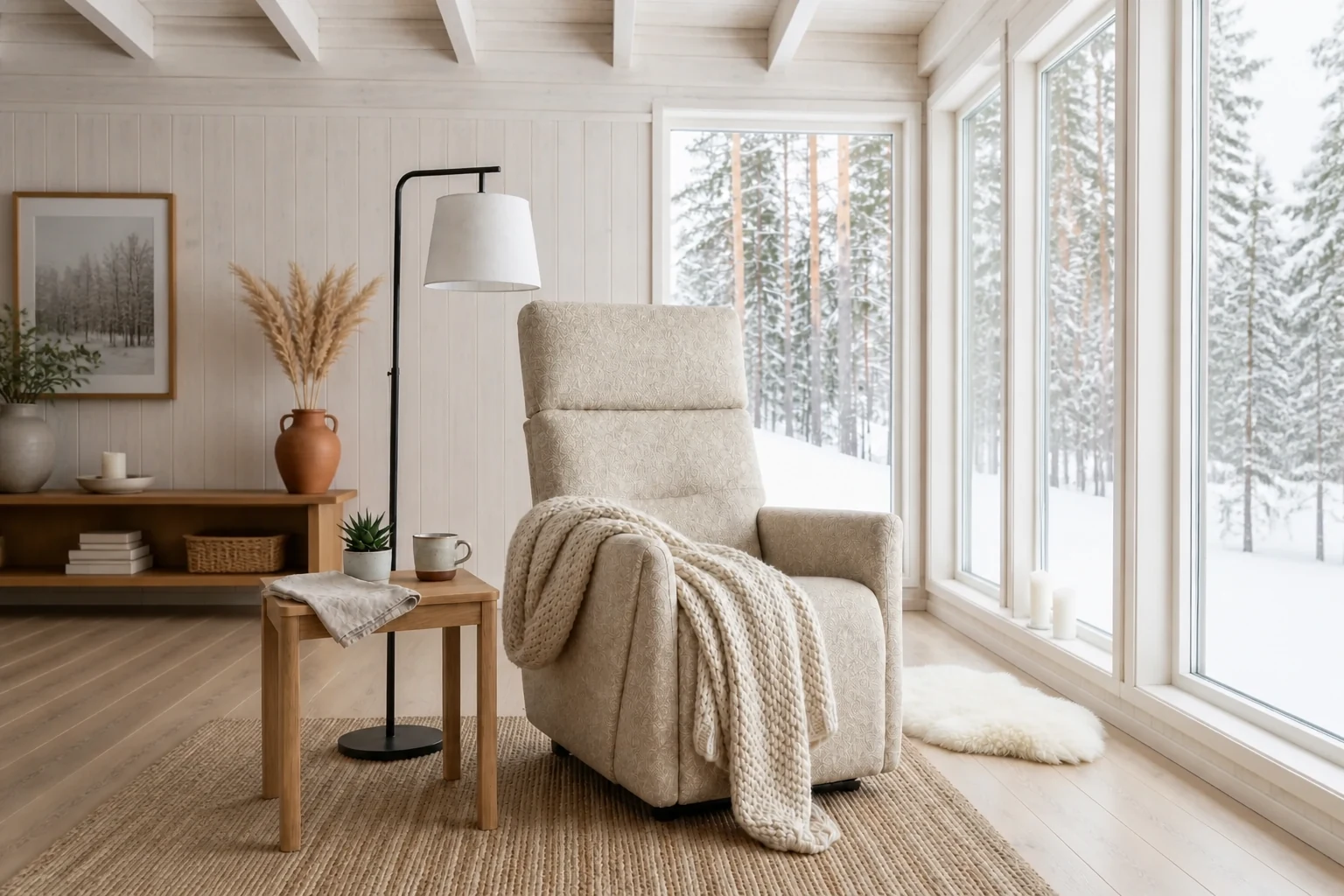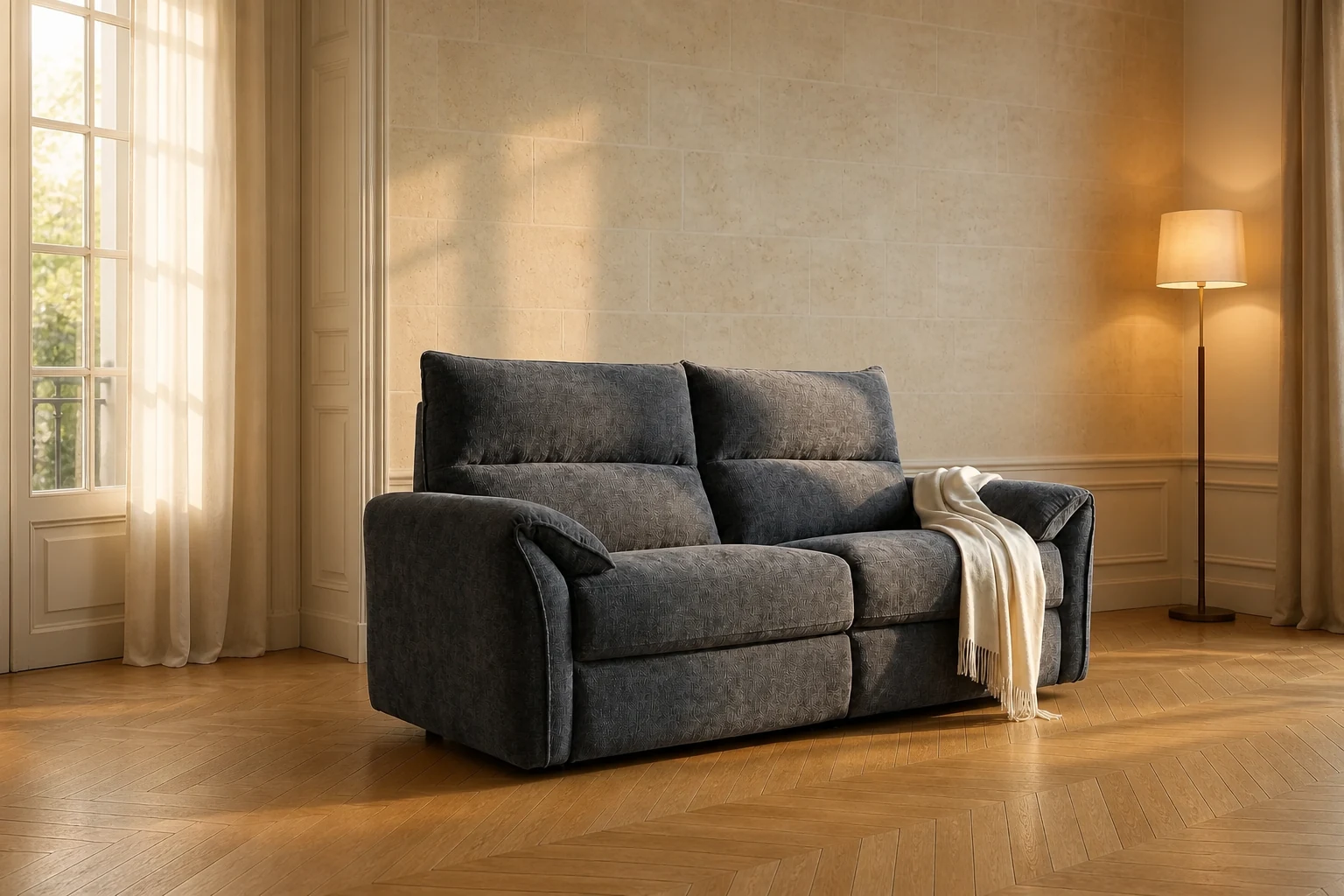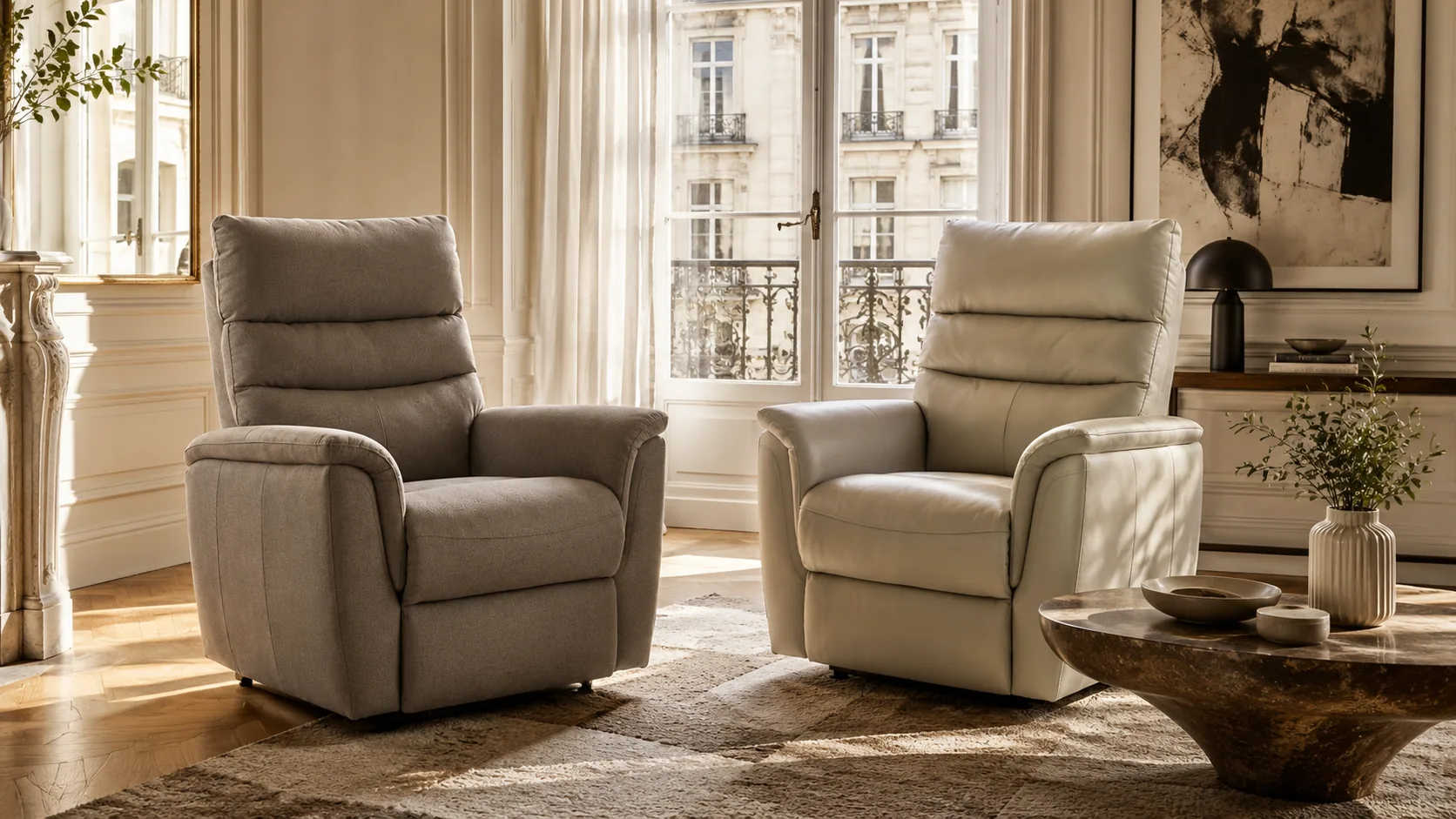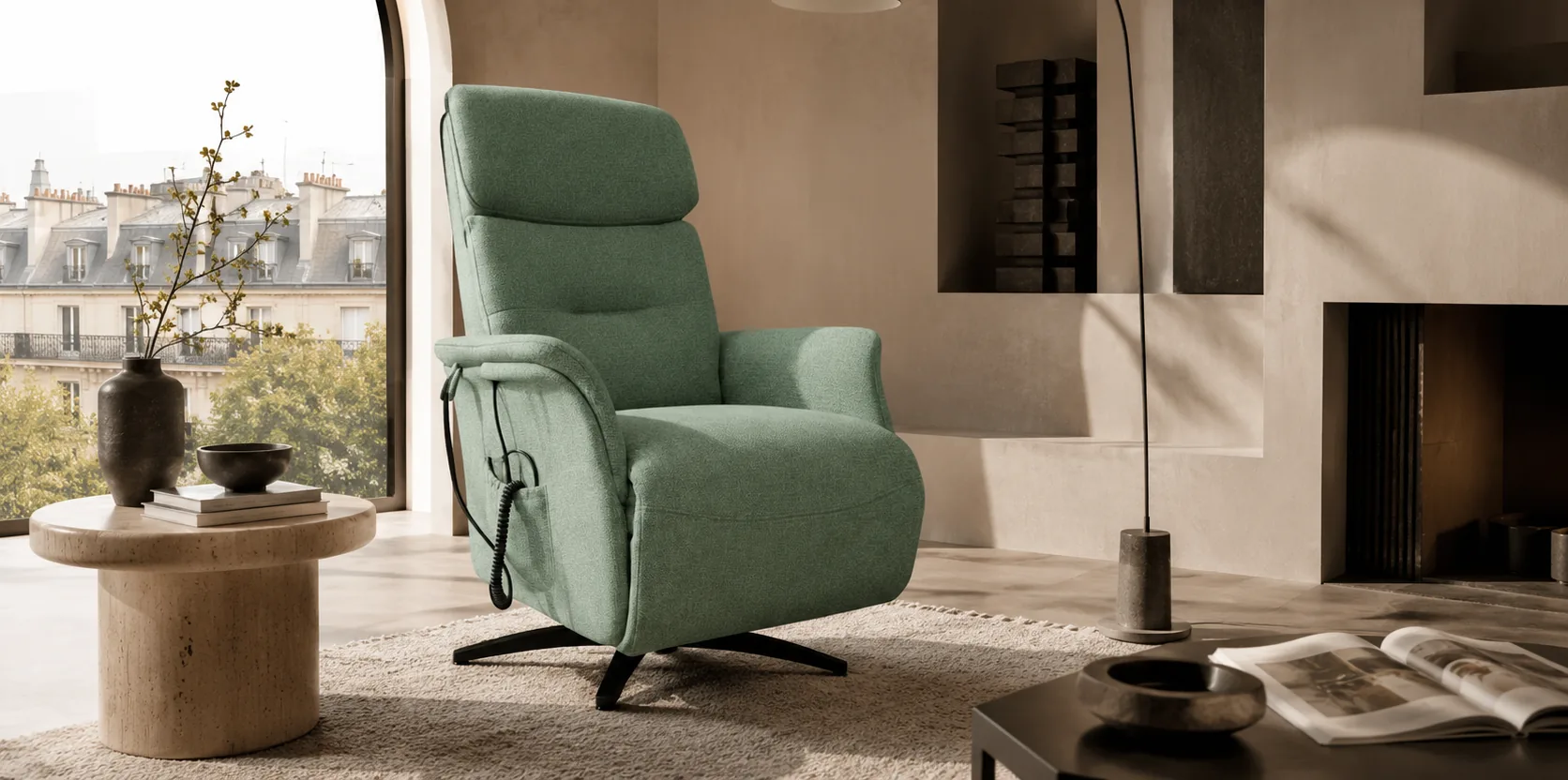
- The mechanism (manual, 1 or 2 motors) determines comfort and budget.
- Leather lasts and develops a patina; fabric is soft and easy to maintain.
- Allow 40 to 60 cm of clearance for the backrest to recline.
- The riser function adds gentle rising assistance — helpful for anyone who finds standing up more difficult.
A relaxation armchair is a reclining seat, manual or electric, designed for several different relaxing positions — including the famous "zero-gravity" position, where the legs are raised above the heart. Choosing the right one means balancing three criteria: the mechanism, the upholstery and the dimensions. Here, step by step, is how to find the one that suits you.
1. The mechanism: manual or electric
This is the first choice, and the one with the biggest impact. It shapes comfort, budget and ease of use alike.
The manual relaxation armchair
The manual model reclines under the pressure of your body: you settle back into the backrest and the leg rest unfolds. With no motor or power connection, it is reliable, quiet and more affordable. It's the ideal choice for an active person looking for two or three relaxing positions, without any complexity.
The electric relaxation armchair
At the touch of a remote control, the electric model adjusts the recline to the exact degree and holds it effortlessly. There are two types:
- 1 motor: the backrest and leg rest move together, with a single adjustment. Simple and comfortable.
- 2 motors: the backrest and leg rest adjust independently, making it possible to reach the "zero-gravity" position and find the exact angle that relieves the back and legs.
| Criteria | Manual | 1-motor electric | 2-motor electric |
|---|---|---|---|
| Adjustment | By body weight | Remote control | Remote control, backrest/legs separate |
| Positions | 2 to 3 | Infinite (linked) | Infinite (independent) |
| Zero gravity | — | Partial | Yes |
| Budget | € | €€ | €€€ |
Our advice: if you spend long spells in your armchair (reading, watching television, napping), the 2-motor model fully justifies its price through the comfort it provides.
2. Upholstery: leather or fabric
Beyond aesthetics, upholstery affects maintenance, durability and how it feels to the touch.
Leather is noble and hard-wearing: it develops a patina over time and stands up to the years. It needs the occasional nourishing treatment and prefers to be kept away from direct heat sources. Fabric, warmer to the touch, offers a far wider range of colours. Our EasyClean fabrics are treated to resist stains: most everyday spills wipe away with water.
"A beautiful upholstery isn't chosen by eye alone: it should also suit your pace of life."
In short: choose leather if you're after durability and a timeless style, and fabric if you prefer softness, colour and effortless maintenance. To find out more, read our guide Leather or fabric: choosing the right upholstery →
3. Getting the dimensions and space right
A relaxation armchair with the wrong dimensions loses all its comfort. Three measurements matter:
- Seat height: your feet should rest flat on the floor, with your knees at a right angle.
- Depth: the lower back should be supported, without the backs of the knees being compressed.
- Clearance required: allow 40 to 60 cm between the backrest and the wall to permit reclining (except for "wall-hugging riser" models designed for smaller spaces).
Also consider the seat width for your build: our ranges include standard models as well as reinforced seats.
4. The right armchair for how you'll use it
The best relaxation armchair isn't the most expensive one — it's the one that matches how you'll actually use it:
- Everyday relaxing (TV, reading): a manual or 1-motor relaxation armchair is more than enough.
- Extended comfort and back relief: choose the 2-motor model and its zero-gravity position.
- Gentle rising assistance: look towards a riser recliner armchair (see below).
- Design-led interiors: choose a swivel model in velvet or leather upholstery.
5. Relaxation armchair or riser recliner?
This question comes up often. The relaxation armchair is designed for relaxing; the riser recliner keeps that same comfort and adds a riser function: the seat gently tilts forward to help you move into a standing position. If standing up has become difficult, the riser recliner is the right choice. Discover the difference in detail →
Frequently asked questions
Which armchair is the most comfortable?
Comfort depends on your build, but a 2-motor electric relaxation armchair, which adjusts the backrest and leg rest independently, offers the greatest freedom of positions — including "zero gravity", recognised for relieving the back and improving circulation.
What's the difference between a relaxation armchair and a riser recliner?
The relaxation armchair is for relaxing (reclining the backrest and legs). The riser recliner adds a riser function: the seat tilts forward to make it easier to move into a standing position.
Leather or fabric: which should you choose for a relaxation armchair?
Leather for durability and a timeless style; fabric (ideally stain-treated) for softness, a choice of colours and simpler maintenance.
What budget should you set aside for a good relaxation armchair?
A good-quality manual model starts in the mid-range; a 2-motor electric model in leather sits at the top end. The key is to judge the quality of the mechanism and padding, which are what guarantee durability, rather than focusing solely on the entry price.
How much space is needed behind the armchair?
Allow 40 to 60 cm of clearance for the backrest to recline, except for "wall-hugging riser" models designed to tilt forward and fit smaller spaces.